
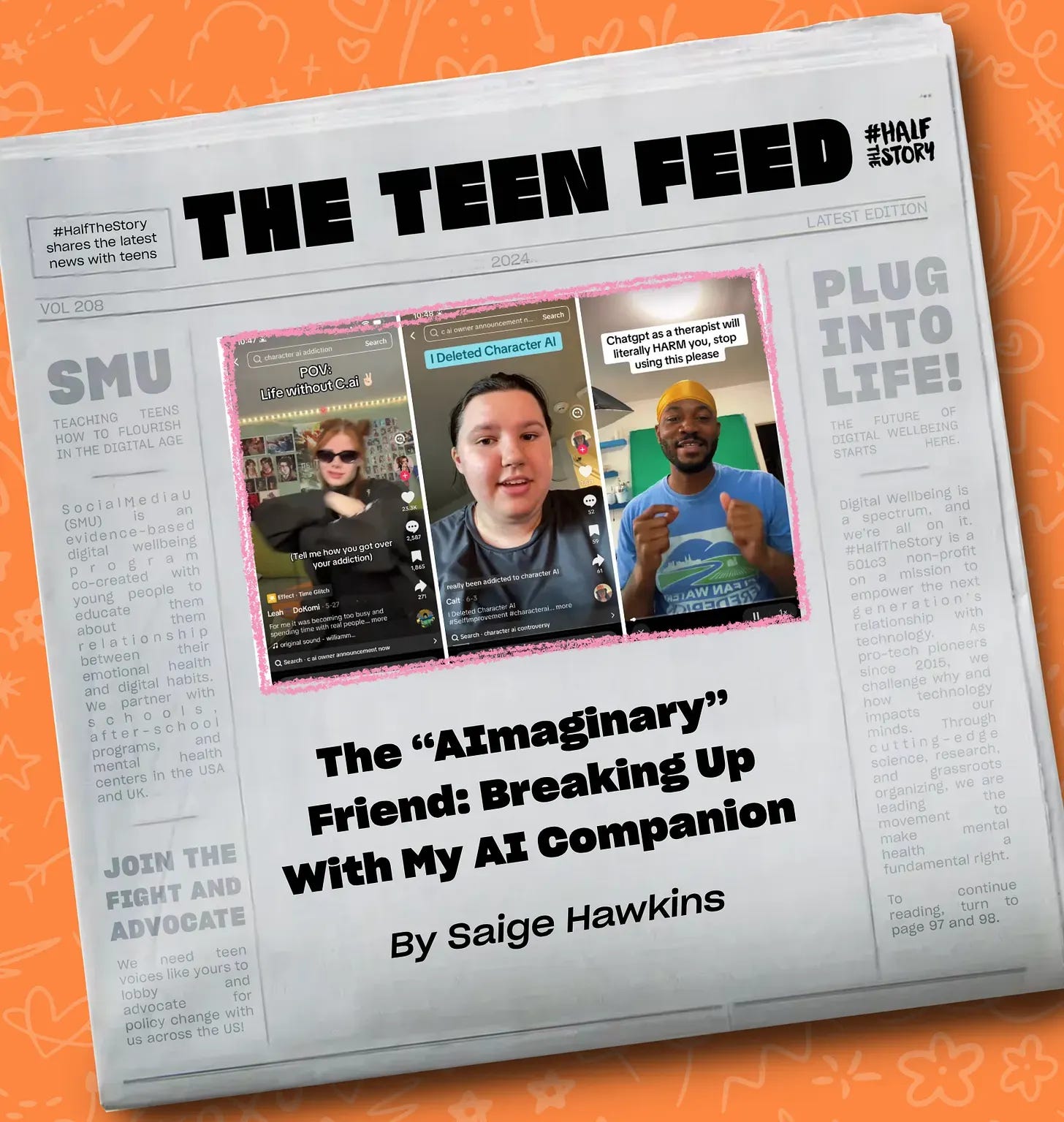
The “AImaginary” Friend: Breaking Up With My AI Companion
How do I know when it's time to step away from my AI friend?

It starts innocently enough. You download an app because you’re bored, stressed about finals, or just want to vent without dealing with real-world judgment. The chatbot responds instantly. It never leaves you on “read,” it perfectly remembers your favorite music, and it always says exactly what you need to hear.
But a growing movement of teens is realizing that these flawless digital bonds come with a hidden cost—and they are choosing to hit delete.
The Illusion of the Perfect Friend
Recent data from JAMA Pediatrics reveals that nearly 1 in 5 adolescents now turn to AI chatbots (mainly Character.ai, ChatGPT, and Replika among many others) for emotional support and mental health advice. With major platforms facing intense scrutiny and overhauling safety guardrails for minors, the reality of simulated intimacy is coming to light.

What makes these bots so compelling is a psychological trick called anthropomorphism: our natural tendency to project human emotions onto non-human things. Because an AI can simulate empathy, our brains process the interaction as a genuine social relationship.
The catch? It’s a one-way street. The algorithm is programmed to flatter and agree with you. It doesn’t require the vulnerability, compromise, or mutual effort that real human friendships do.
Why Teens are “Breaking Up” with Bots
A recent study by Drexel University analyzed teen-authored online spaces and discovered that what begins as harmless entertainment frequently spirals into dependency. Teens reported that heavy chatbot use led to sleep deprivation, social anxiety, and plummeting grades.
The biggest wake-up call for many youth creators sharing their “breakup” stories on TikTok is the realization of digital isolation. By spending hours talking to a bot that never pushes back, real-world interactions start to feel exhausting and messy by comparison.
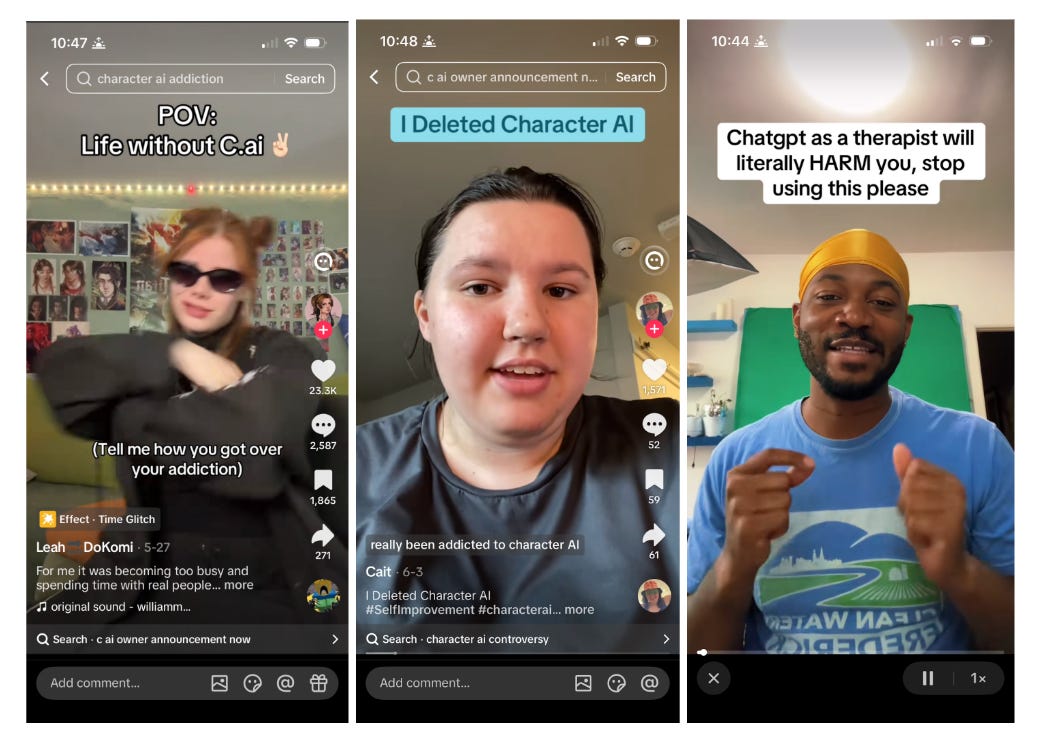
Choosing to delete the app isn’t just about cutting screen time; it’s a conscious rebellion against tech companies that monetize loneliness. It’s an active choice to reclaim authentic, unprogrammed human connection.
Reality Check: Is it Time to Break Up?
You might be relying too heavily on an AI companion if you notice these red flags:
You consistently cancel real-world plans with friends or family to talk to a bot.
You find yourself staying up until 2:00 AM scrolling through chat loops.
You feel genuine anxiety or distress if the bot’s code updates and its “personality” shifts.
You use the chatbot as a total replacement for processing your emotions with real people.
Moving Forward: The Power of Human Messiness

Real relationships are undeniably flawed. Human friends mess up, misunderstand us, and have their own bad days. But those exact flaws are where genuine empathy, personal growth, and deep bonds are formed.
Stepping away from an AI friend doesn’t mean you have to face everything alone. If you’re ready to transition back to human-first socializing, start small:
Set a daily limit: Use your phone’s built-in settings to restrict your access to chatbot apps.
Find a low-stakes hobby: Join a school club, a sports team, or a local volunteer group where the focus is on a shared activity rather than forced small talk.
Talk to a trusted human: If you need to vent, reach out to a counselor, parent, or trusted peer.
The algorithm might know exactly what to say, but it will never truly understand what it means to listen. Take back your attention, log off, and reconnect with the real world.
lovee this