

A Teen’s Perspective on Social‑Media Bans
In eighth grade, I wrote my first ever article for the journalism unit about teens, phones, and mental health. It was the first time I realized how quickly technology shapes our behavior.

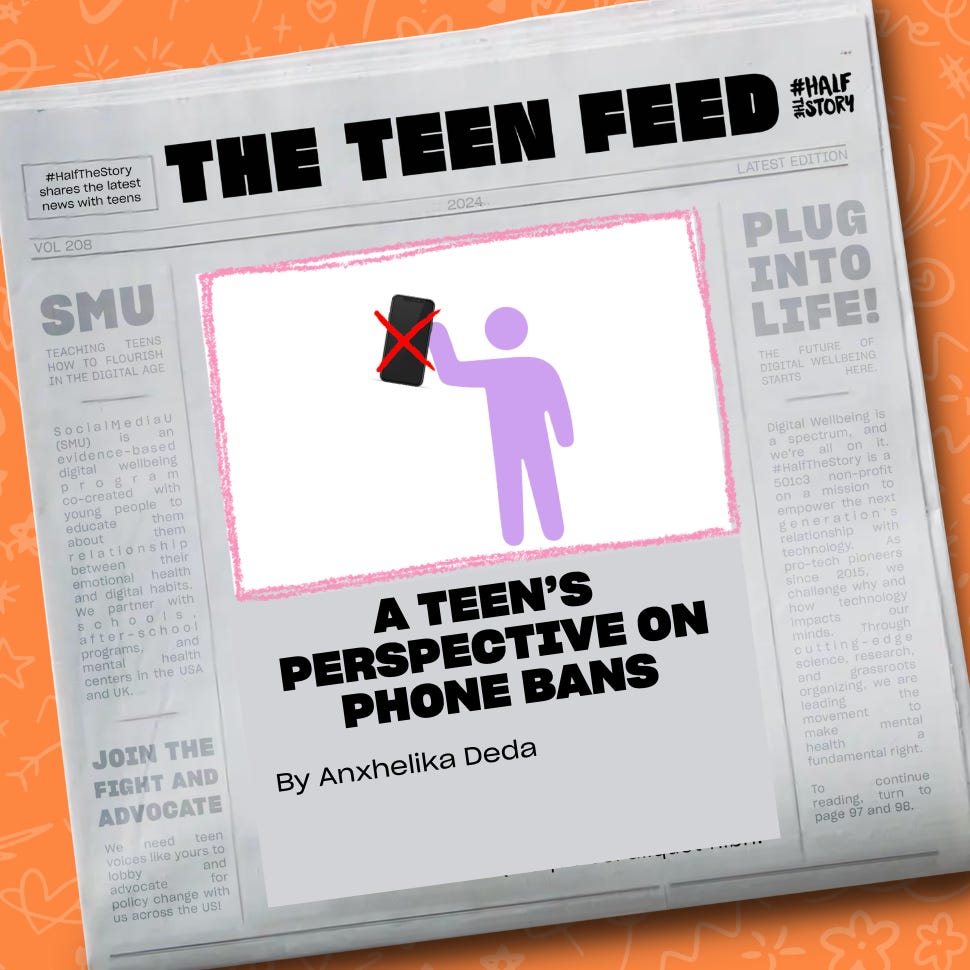
In eighth grade, I wrote my first ever article for the journalism unit about teens, phones, and mental health. It was the first time I realized how quickly technology shapes our behavior, even when adults may not fully understand the consequences. Years later, the debate has only grown more complicated, and the policies meant to “fix” it often create new problems of their own.
Policies create ripple effects: cultural, behavioral, and ethical. Sometimes those effects matter more than the policy’s stated goal. Australia’s under‑16 ban illustrates this, revealing a lot about how societies attempt to regulate teen life.
While the law sounds strict, enforcement may be uneven in practice. “The New Yorker” article shared data, “At the same time, less than half of the Australian public believes the ban will be effective—and, according to a recent poll published in the Sydney Morning Herald, fewer than a third of parents plan to enforce the ban in their households, by deleting the relevant apps off their children’s phone.” That gap between intention and belief is the first sign that the policy’s real impact won’t come from enforcement, but from the message it sends.
Many teens will still find ways around it. The article gives concrete examples that show how quickly young people adapt to restrictions, “What this means is that many young people will be able to get around the bans, for example by using virtual private networks, or V.P.N.s, which can make an internet user appear to be in a different country.” This isn’t just about loopholes. It’s about how teens respond when adults legislate their online lives without fully understanding how the internet works.
Even so, laws can shift norms even when they don’t fully work. The article makes this point directly, saying “... the social norm established by the law and its robust popularity among politicians and voters will lead to a significant downturn in social-media use by minors nonetheless.” This is the heart of the argument: the cultural ripple matters more than the rule itself.
That shift, not the rule, becomes the real byproduct. It’s the kind of change that happens slowly, through expectations and habits, not through fines or punishments. The article also argues that adults need to change their own digital habits. This is a crucial point, because teen behavior doesn’t exist in a vacuum, after all, “we all need to put down the phones.” The piece makes it clear that adult inconsistency weakens any policy aimed at kids. If parents and teachers can’t model healthier digital lives, the rules will always feel hypocritical. This debate sparks a broader cultural movement: schools tightening phone rules, parents pushing back, communities rethinking norms.
These aren’t isolated reactions. They’re signs of a national shift in how people think about youth, attention, and technology. The piece describes this as a wider pushback around youth phone use, “The signs of this quiet revolution…are already all around us.”
It’s not loud or dramatic. It’s slow, local, and driven by everyday frustration with how much time kids spend online.
Because we’re the ones immersed in these apps, teens often become the first to adjust our behavior and push back against how addictive they are. That quiet self‑regulation usually happens long before adults or lawmakers notice.